What do engineers do while the model answers questions?
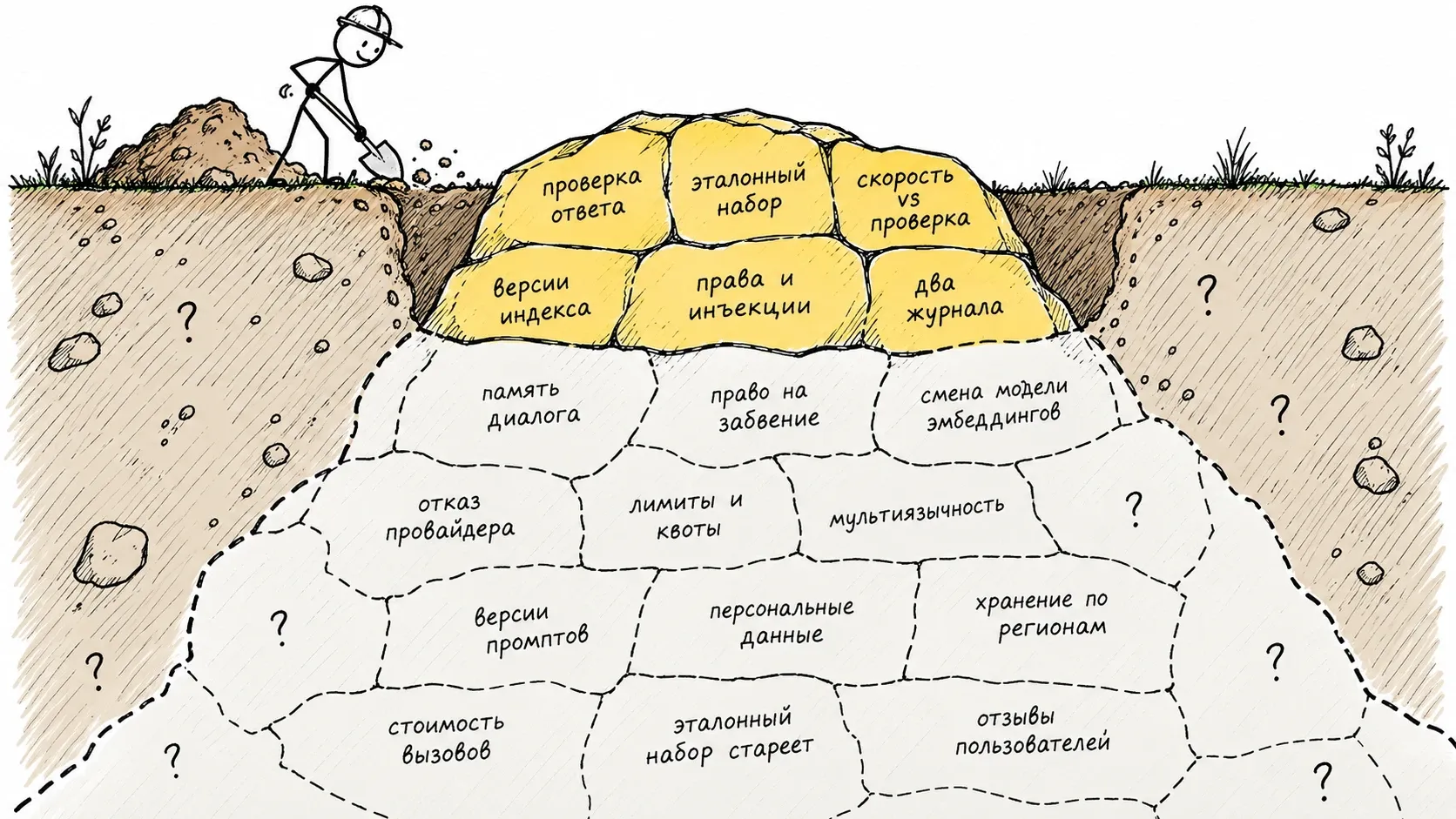
A prototype AI assistant over your documents now comes together in an evening: four blocks, and it already answers. This talk is about what happens to such a system next, once people start relying on its answers.
It is a drama in four acts about how one production system evolved. In each act the model breaks a familiar belief, and engineering fixes it. Correct code no longer guarantees a correct answer. Architecture stops being universal when every check costs seconds. Data in the model’s context no longer just sits there: it can give orders. And last Tuesday’s answer can no longer be reproduced.
Each problem gets a solution from a running system, along with the year a similar problem was first solved without any AI: the test oracle problem in 1982, sagas in 1987, row-level security in 1999, fencing in 2006. Over four acts the diagram grew from 4 components to 17, and the AI core’s share of the code fell from 88 to 16 percent.
So what do engineers do while the model answers questions? They grow the system while keeping control over how it behaves. Engineering here is not a separate layer but a culture of how the system grows.
I will go through each act in more detail in separate posts; they will appear under Writing.